Knowunity
Turning homework scanning into bite-sized learning
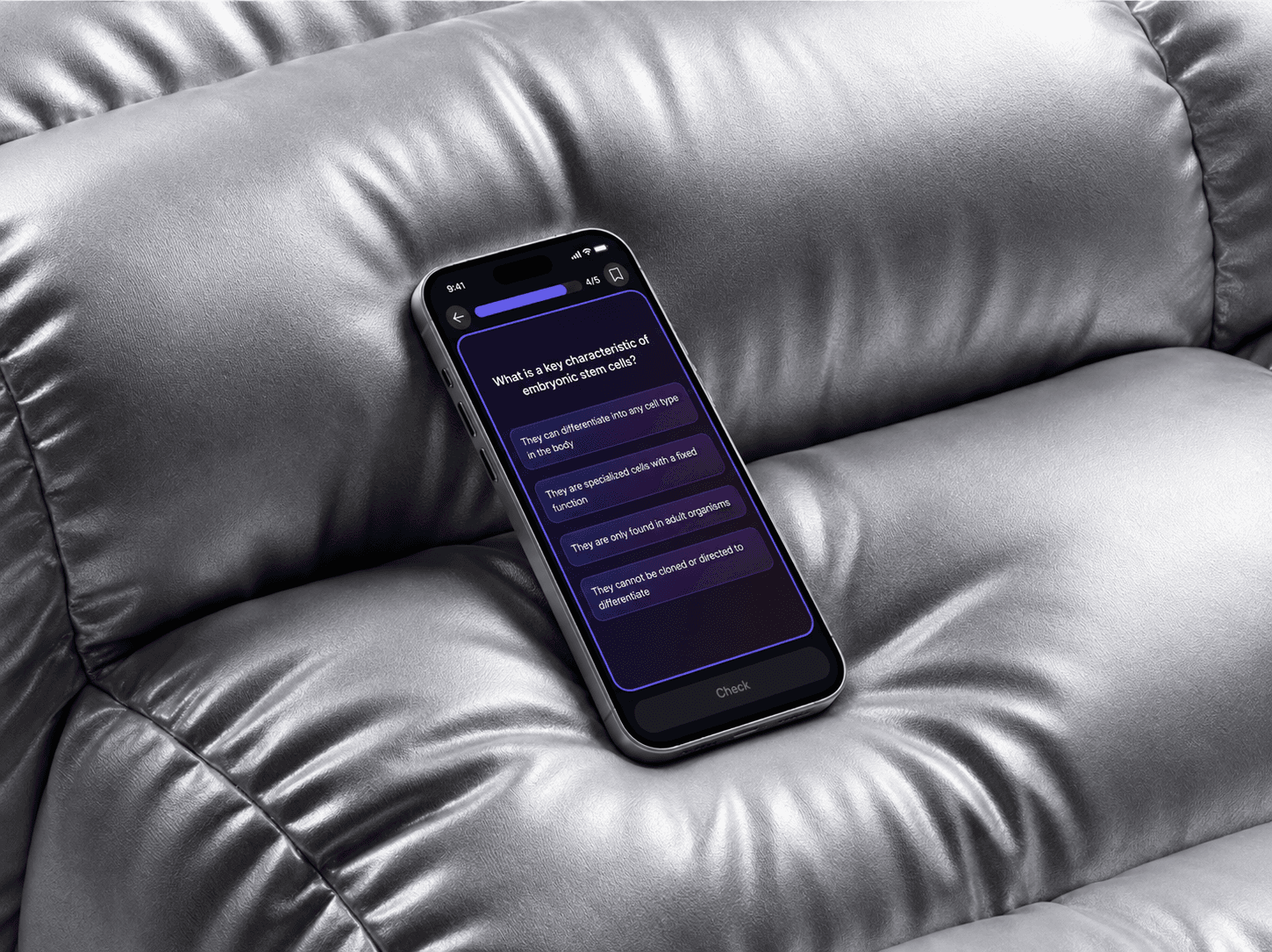
US students used Knowunity to finish homework and leave. I designed the quiz flow that lifted day-1 retention by 30% and gave them a reason to come back and study.
At a glance
Homework shortcut → daily study habit.
- Day-1 retention lift, US app
- +30%
- Questions per quiz, A/B tested
- 5
- Entry points, A/B tested
- 3
- Role
- Product Designer, reporting to the CPO
- Team
- 1 PM, 3 engineers
- Timeline
- 2024 to 2025
- Methods
- Interviews, usage data, education research, competitive research, A/B testing
Context
A European study app that had to win over US students.
Knowunity is built around three things: handwritten notes shared between students, photographing a homework problem to get it explained, and a chat with AI for learning better.
I joined as Product Designer, reporting to the CPO and working from the US, hired specifically to make the product work for US students. The flow that had won in Europe wasn't landing the same way here. I spent three months researching, strategizing, and designing a new core flow from scratch, then seven more testing and iterating on it.
Problem
Students opened it to finish homework, then closed it.
Early US engagement looked fine on a dashboard. Underneath: scan the problem, get the answer, close the app. It solved tonight's assignment and nothing after it.
Opening the app tired, wanting the fastest way out of the assignment in front of them.
That's a retention problem. It's also a credibility problem for an app whose whole promise is helping students learn.
Research
Two education systems. Two ways of learning.
12 moderated interviews, usage data, education research and competitive research.
Europe
- Centralized systems, national exams (e.g. Germany's Abitur)
- Engaged more with other users: groups, chats, uploading notes
- Group chats skewed academic
United States
- Decentralized and locally controlled, with more variance school to school
- Leaned on the AI features more than European students
- Motivated by grades, money, or volunteer-hour credit; chats skewed recreational
Insight
A cultural gap, not a motivation gap.
In my interviews, completion beat comprehension, since homework can count for up to 40% of a grade. Students used it to get answers, so they never practiced.
The fix was short, confidence-boosting moments that fit an exhausted student's day.
The build
Five questions. Three ways in.
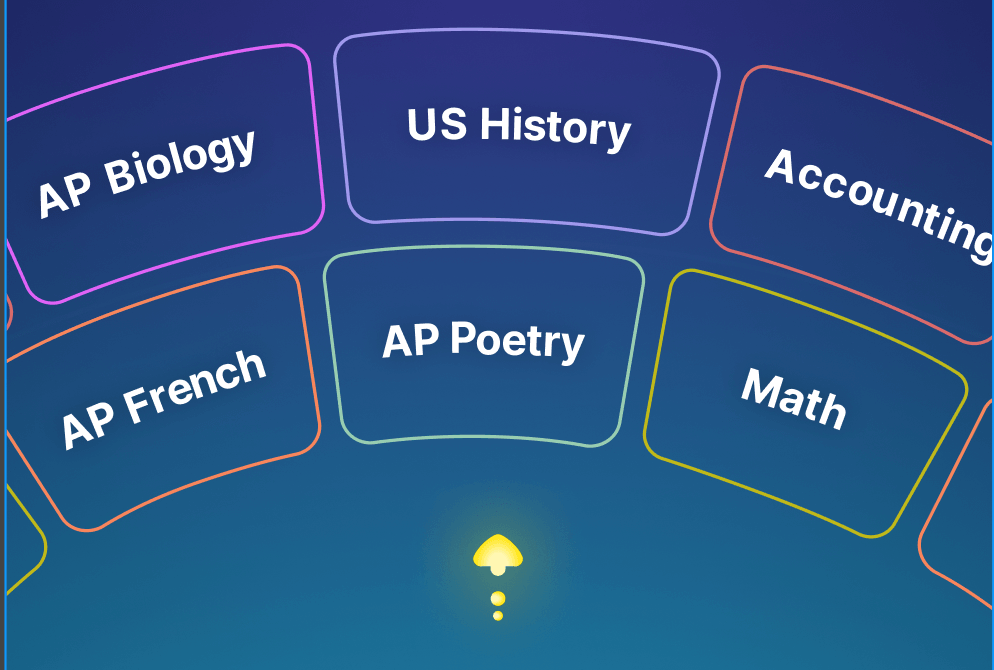
A short quiz, generated depending on the moment: from a subject the student picked, from homework they'd just scanned, or straight out of their chat with the AI.
The trade-off
We bet on delight. Then it got in the way.
For the MVP, we bet on a super gamified experience and a magic moment: a custom, hand-tuned wheel and a scrollable quiz, instead of a plain linear quiz, even at extra design and engineering cost.
When the quiz flow became part of the core app, the wheel did not scale, so we redesigned it.
AI quality
Checking what the AI writes.
Because the AI writes the questions, we tested the generated questions ourselves before launch and added flows for students to report problems with a question.
Evolution
More agency, over time.
We let students generate their own quizzes by feeding the AI their own materials, then added a shortcut for it directly inside the chat.
Impact
The most successful feature I shipped at Knowunity.
The quiz lifted day-1 retention among US students by 30%. Knowunity stopped being the app students opened to get through an assignment, and moved from a homework shortcut toward a study habit.
That shift in behavior helped make the case for the $20M Series B that funded the next stage of the US expansion.